

© 2024, Farok J. Contractor, Distinguished Professor, Rutgers Business School
India, with its expanding economy, has finally arrived on the world stage as a potentially very important market and supply chain partner for multinational companies. What factors within the country attract multinationals to engage in foreign direct investment (FDI) in India? What factors within India still prove to be an impediment to potential investors or cause restraint from the companies’ point of view?
Anchored in the traditions of one of the world’s most ancient civilizations, India is also one of the world’s fastest-growing major economies. Between 2021 and 2024, India’s economy has grown at an enviable 6–7 percent per year. Having shed many of its colonial and socialist legacies, India is now ready to open up to international business and multinational investment. At the end of 2024, the penetration of global business is still very low, given the giant size of its economy. But that also means there is a big opportunity for international companies to participate in and accelerate India’s emergence as a global player.

The focus of this updated article is to examine how India’s domestic market appears to prospective foreign investors, as well as the role India can play in international supply chains. Opportunities and remaining obstacles are both covered in this piece to provide a realistic and balanced view.
My overall conclusion about India as a global player is optimistic, especially with multinationals seeking to disengage from China and source instead from countries like India, where the more than 400 million persons that are currently un-/underemployed can become manufacturing workers. The need for jobs is great. Many policymakers in top central governmental positions are market-oriented and conversant with international economics. The domestic market is huge and growing at double digits. But the legacies of the past, including red tape, regulations, and weak ethical standards, still linger and need to be overcome.
In 2022, India was the eighth largest recipient of foreign direct investment (FDI) in the world. This was a record for the country but is way below other nations in terms of the ratio of FDI to gross domestic product (GDP). This indicates that India’s economy remains at a very low participation level in international business, given that it is the world’s third-biggest economy (in purchasing power parity [PPP] terms). India’s FDI/GDP ratio, at 1.41 percent,[1] was half the global average of 2.8 percent, and India was ranked by the Organisation for Economic Co-operation and Development (OECD) at 126th in the world.
But this same low penetration of international business also prefigures considerable promise and potential, especially where India enjoys a comparative advantage in sectors such as agribusiness, tourism, renewable energy, low-wage mass manufacturing, and services (e.g., India has the third-largest base of startups or “unicorns” in the world[2] and 115 million English speakers).
India as a Global Supply Chain Hub
Participation in international supply chains has become part and parcel of India’s quest for atmanirbhar (self-reliance). In a speech at the SEMICON 2024 conference, Prime Minister Modi said, “Resilience of the supply chain is very important. India is working to create the same in different sectors of the economy.”[3] On October 12, 2022, in a speech in Washington, DC, Finance Minister Nirmala Sitharaman announced an official policy of linking global value chains (GVCs) with the intended increase of manufacturing jobs in India in a production-linked incentive (PLI) scheme to attract multinational company investment.[4] Like most other emerging nations, this is a sea change in attitudes, compared with half a century ago when multinationals were forced out of India in 1977. Today’s Modi administration exudes self-confidence in being able to harness incoming FDI to India’s net advantage.
The concept of “Global Value Chains” is similar to “International Supply Chains,” but is broader and more top-level in that it includes a two-tiered strategy: multinational firms have to first decide how finely to slice their operations and what value is to be added in-house versus outsourced or offshored and then design the geographical configuration of their supply chains.
See BREAKOUT BOX 1 at End of Article: “What Is the Difference Between Global Value Chains (GVCs) and International Supply Chains?“
India as an Attractive Consumer Market
To multinational companies, India is also a highly interesting and growing consumer market, valued by India’s Economic Times at “$2.1 trillion in 2023, with its household consumption nearly doubling over the past decade, making it on track to become the world’s third-largest consumer market by 2026.”[5] While this may be slightly exaggerated, global players such as Unilever declared in 2024 that they will “…put India at the center of its new (global) strategy”[6] (parentheses added). The reason is obvious: a 1.46 billion population, the largest in the world. Unilever is a purveyor of basic consumer goods such as toothpaste, prepared food, and soap. Besides being the world’s most populous country, India has a young population (median age 29.5 years), and it will keep growing until the mid-2060s – in contrast with China, which is already declining in numbers, and Europe, which is in a steep population fall.
Many Western economists calculate (using actual exchange rates) that India’s GDP in 2025 will likely surpass Japan’s to become the fourth-largest economy. (In PPP terms, it is already the third largest after US and China.)
According to a Brookings Institution study, India has one of the top five largest consumer bases in the world – as many as 473 million buyers (defined as “…those spending more than $12 a day in 2017 PPP”) (Caballero & Fengler, 2023). While the Indian consumer’s purchasing power in 2023 is less than half that of the Chinese market, India’s demographics and growth rate mean the consumer base will expand faster than that of China. Moreover, India is perceived as much more open and friendly toward foreign firms than China, whose government “tilts the playing field” much in favor of its own domestic firms.
Harnessing the Net Benefits Multinationals Bring with Them
The Indian market may be good for multinationals. But how can India harness incoming FDI to its net advantage? Numerous studies have examined the benefits as well as the costs of FDI to host nations. But a report from the OECD details how a clever government can utilize FDI to its net benefit (OECD, 2002). Multinationals not only hire locals, but bring with them advanced technologies, management methods, manufacturing techniques, global sustainability and ethical standards, distribution outlets to world markets, and, in general, upgraded skills and R&D in host nations (Contractor, 2022[7]). The OECD (2002) report, among others, emphasizes careful and measured government policies in formulating tax and incentive policies by the host government, as well as the government acting as a (neutral) watchdog in order to maximize the next benefit extracted from incoming investment.
India can profitably emulate the example of the “Asian Tiger” economies. South Korea is a classic example of a country that uplifted its population from abject poverty to affluence within two generations by opening the door to multinationals so that local firms could learn from them and build up their own “muscle,” crafting a thoughtful balance of nationalism and open-door policies (Park, 1996). Today, Korean firms such as Samsung, LG, and Hyundai have not only absorbed technology from inward FDI but have become formidable global competitors in their own right.
China provides another example. Deng Xiao Ping and his successors in China opened the door in the 1980s to incoming FDI with three hidden intentions:
First: To have local Chinese companies learn from and copy the superior technology and methods of foreign subsidiaries operating in China. In a telling fact, we see that from 1980 to 2012 the majority of China’s exports were done by multinational companies. But after 2013, having learned from multinationals, exports of domestic Chinese companies exceeded the volume of exports done by foreign affiliates in China. By 2021, the share of foreign affiliates in Chinese exports had fallen to only 34 percent, with domestic Chinese firms exporting 66 percent (Statistia.com, 2023). They learned well. (See the CASE STUDY below of the Chinese appliance company Galanz.)
Second: To expand the domestic Chinese market and boost GDP.
Third: To create manufacturing jobs and make China the “factory for the world.” Most exports and manufacturing take place on the eastern seaboard of China. In one of the biggest internal migrations in human history (between 1980 and 2018), a cumulative 200 million or more Chinese left their interior villages and towns – sometimes even leaving their children with their grandparents – in order to become manufacturing workers on the east coast. China thus succeeded brilliantly in mass job creation.[8]
Employment Creation in India Is a Crying Need: Manufacturing and Export Jobs
The business press in India is puffed up about the country’s success and prowess in high-end services such as digitalization and research in the IT and pharmaceutical sectors. Justifiably so. But sophisticated service sectors account for only tens of millions of jobs, recruiting from families that are already rich, middle-class, and educated. Meanwhile, according to a calculation by Contractor (2023), 433 million Indians are un-/under employed, having only part-time jobs on the farm or selling balloons and candy on Indian beaches. (This number closely matches the 415 million number estimated by the International Labor Organization [ILO; 2022].[9]) Of these, using the World Bank criterion of income below $2.15 per person per day, 144 million Indians live in abject poverty, according to Mehta & O’Donnell (2022).

Belatedly, the Indian leadership has realized that this is a problem and that inviting multinationals to create export-oriented jobs is part of the solution. Speaking in Washington, DC in October 2022, Finance Minister Sitharaman said: “…India must raise its manufacturing share of GDP for it generates employment both for the skilled and semiskilled.”3 For a quarter century, India’s domestic share of manufacturing in GDP has stagnated at between 14 and 17 percent. And despite its giant economy in the world, India’s global share of manufactures is still a paltry 3.3 percent. But every dismal statistic on India also reflects an upside opportunity or potential.
The potential is bright, according to the Boston Consulting Group’s (BCG’s) Global Manufacturing Competitiveness Index – in 2020, India was scored at 87 out of 100, not too different from China at 95 or Vietnam at 94 and higher than Mexico and Thailand at 86 or Malaysia and Indonesia at 83 (Boston Consulting Group, 2020). Of course, the BCG competitiveness index is based on only input costs, including wages. India scores high because of its low manufacturing sector wages of $1.25 – $1.75 per hour compared with Vietnam’s $3.00 and China’s $5.00 – $8.00 per hour (Contractor, 2023). Tetakawi (2021) puts Mexican wages in manufacturing at $3.04 per hour.
India is more cost competitive than most other emerging country rivals, and even Mexico – which in 2023 was the largest source of imports to the US at $475.6 billion, compared with India’s exports to the US of only $87.28 billion. Even after accounting for Mexico’s proximity to the US, what explains this huge difference?
Despite India’s Competitive Potential, What Past Factors Impeded India’s Manufacturing Exports?
The World Bank’s annual survey[10] comparing 190 countries ranked each nation by its relative Ease of Doing Business score. The survey measured the (1) difficulty, (2) cost, (3) delays, and (4) burdens on business based on criteria such as the difficulty in starting a business and acquiring land, the effectiveness of the judicial system, difficulties at ports, the tax burden, protection of minority investors, delays in bankruptcy proceedings, etc. (World Bank, 2020).
India’s score for “Ease of Doing Business” showed a steady improvement from 2015 onward, from 55 to 71 (theoretical best = 100), and India’s ranking among countries jumped from a dismal 142nd in 2014 to 63rd in 2019. This was a gratifying improvement for which the present government deserves credit as it has tried to streamline bureaucracies, amend labor and bankruptcy laws, and introduce market-friendly reforms. However, the 60– 70 ranking still puts India in the company of countries such as Mexico, Ukraine, Colombia, and Uzbekistan, which are hardly exemplars of a business-friendly environment, rule-of-law compliance, or freedom from corruption. The 2023 Index of Economic Freedom from the Heritage Foundation (2023) ranks India at only 131 in the company of countries such as Guinea, Angola, and Malawi.
According to TeamLease, a staffing, regulatory, and compliance management firm in Bangalore, in 2020 businesses in India faced a cumulative “…1,536 acts of parliament, 69,233 bureaucratic compliances, and 6,618 filings.[11] Of these, almost a third (30%, or 463) of the laws and almost half (47%, or 32,542) [of the] compliances come under the labour category. Statistically, almost all the compliances (97.1%) are governed by state governments and 937 by the Union government.” Labor laws still await reform in 2024, with relic regulations and “red tape” going back to the British Raj.

Contractor (2018) identified seven factors inhibiting Indian manufacturing and incoming FDI, lamenting the 1:6 trade imbalance that existed between India and China (it has worsened to 1:9 in 2023). The inhibiting factors included bureaucracy, lack of scale, labor productivity and discipline, internal transport costs, lack of international marketing savvy, and delays in moving cargo through ports and customs. This was echoed by Bhardwaj & Chakraborty (2019), who added corruption to the list of impediments.
The lack of sufficient reform in labor regulations stems from the fact that India is a democracy, and unions and the parliamentary opposition are vociferous. In addition, Indian cultural norms at least nominally preach compassion toward lower-income segments of the population. In recent legislation, the Modi government has taken only baby steps to address labor issues and trimmed some forms, procedures, and bureaucracy. In infrastructure, India has made large improvements in roads, ports, and airports.
The last item – ease of moving cargo across borders – is most important and critical to India’s future participation in GVCs or international supply chains where speed and flexibility are paramount in the minds of multinational companies. Delays in only one point in the international supply chain can affect the entire chain.
Making India a Hub for GVC Manufacturing
What are multinational companies looking for when they select a country as a production base – especially for exports and imports? “Speed,” “flexibility,” and “agility.” In a study of 189 nations, Contractor et al. (2020) found that out of the country characteristics that attract or repel FDI, the one that statistically stood out as most significant was the time delays, number of forms, tariffs, and fees in moving cargo across a border. In short, delays, bureaucracy, costs, and the speed of loading and unloading at ports were of critical importance to multinationals. International supply chains figure highly as a strategic consideration in multinational companies’ thinking.
Of course, reducing obstacles and easing business operations is a necessary, but not sufficient, condition for attracting FDI. Manufacturing in India for both domestic consumption and exports has to be intrinsically attractive. As noted above, the BCG rates India high on manufacturing cost competitiveness, mainly because of low labor costs compared with those of China, Mexico, or even Vietnam.
To necessary conditions of speed, flexibility, and agility, multinational company strategists add “reliability” in supply chains, especially after the pandemic and the geopolitical shocks of recent years. In the Contractor, et al. (2020) study, the second most significant consideration in the minds of executives was rule-of-law compliance or the effectiveness of recourse in contract disputes in the country’s courts. If something goes wrong in an international supply chain, the matter must be fixed quickly, or else it affects the entire global operation. Here, India still lags badly behind, with a few court cases hanging for more than five decades.[12] According to Mittal (2023), quoting numbers from the National Judicial Data Grid (NJDG), in 2022 “…43.9 million cases lay pending before the District courts…6.1 million cases are pending before the High Courts…and 68,745 cases are pending before the Supreme Court as of June 1, 2023.”
Perhaps one solution to this amazing obstacle is for the Indian government to promise commitments to new incoming FDI that the country will establish entirely separate, new courts or arbitration venues for multinational companies exclusively.[13]
India’s Opportunity: The Pros and Cons of Participating in Global Value Chains (GVCs)
The moment is ripe for India to actively participate in GVCs for three crucial reasons: (1) to learn technologies from foreign partners, (2) to give employment to the more than 400 million Indians who are either unemployed or marginally employed, and (3) to offer an alternative to US and European companies that increasingly desire some “decoupling” from dependence on Chinese sources. With geopolitical tensions rising between the US and EU on the one hand and China on the other, multinationals are eagerly looking for alternative locations for value-added activities or sourcing (Xing, 2022). Witt et al. (2023) predict that this “decoupling” is likely to accelerate. In addition, India offers an attractive, large, and fast-growing market. According to Rodriguez et al. (2023), costs are rising and performance is declining in China. India has the opportunity to take over from China the title “factory for the world.”
This is only just beginning to happen. The Indian government’s PLI subsidies designed to lure large-scale electronics manufacturing convinced Apple to partially delink from China (increasingly threatened by Trump’s tariffs). Apple’s assembler partners (such as Wistron and Pegatron) have built operations in India with more than 150,000 workers. However, Apple assembler partners in India continue to face difficulties in terms of low worker discipline and productivity, a dearth of local sub-suppliers, and a heavy bureaucratic overhead. So far, Apple’s supply chain sourcing from India is strategically geared to the fast-growth Indian consumer market and a few other emerging markets. However, Apple’s future ambitions – especially if US-China relations become even more strained – include meeting a quarter of its global demand from India.
It is true that when a country first invites supply chain FDI, production is of a simple sort or involves basic assembly work done by relatively unskilled workers. But that is only the beginning. Japan, South Korea, and Taiwan in the 1960s and 1970s were the exporters of cheap toys, shoes, and garments. Today, by learning from their multinational partners, their companies (e.g., Toshiba, Mitsubishi, Samsung, LG, TSMC) have climbed to the very top of the technological heap.
In 1995, Vietnam was an agricultural economy. Its per capita income was a mere $290 compared with India’s $490 (in 1995 dollars). With its “Đổi Mới” slogan (meaning renovation and innovation), Vietnam implemented economic and political reforms that actively invited multinationals into the country, and Vietnam began at the bottom as a low-skill production GVC partner making simple footwear and garments. But by 2023, Vietnam had upgraded its skills and technology to become a producer and exporter of sophisticated electronics and machinery. Local companies have learned designs and technologies from their foreign partners. On April 16, 2023, a Vietnamese electric vehicle maker was – very briefly – listed on NASDAQ with a capitalization temporarily higher than that of Ford or General Motors (Chiang, 2023). In 2022, Vietnam’s per capita income (at $4,164) had considerably surpassed India’s (at $2,388) (World Bank Data, 2023). More important for its people, compared with the more than 400 million Indians who remain marginally employed or unemployed, Vietnam can be described as near full employment, its foreign company affiliates reporting labor shortages when trying to fill jobs.
Hence the old argument that participation in either international supply chains or GVCs is somehow subservient or recreates the core vs. periphery pattern – with the “good” jobs concentrated in the Global North and “bad” jobs in the Global South – is now obsolete.
It is true that participating in GVCs creates interdependence on other countries. But then, all economic activity is mostly a story of mutually beneficial exchange and interdependence. Happily, the Modi government exudes self-confidence in being able to harness FDI to India’s net advantage, as seen in the foregoing remarks by the Foreign Secretary and Finance Minister (Business Standard, 2021; Times of India, 2022). This self-confidence stems from the enormous bargaining power of the large Indian domestic market (and GDP), as well as the fact that many in leadership have business and economics education from top schools in India and the West that have conferred on them knowledge of international economics, global business, and negotiating skills.
Policies with a “Supply Chain Mindset”
Government policies need to be tailored for different kinds of GVCs. Gereffi et al. (2021) identify three types, where the multinational (1) is willing to diffuse technology and knowledge to suppliers, (2) actively limits technology or knowledge-sharing to reduce the future competitive rivalry from the supplier, and (3) seeks to learn from its supplier, something also known as “reverse innovation” (Govindarajan & Ramamurti, 2011). Industrial policies[14] in host nations therefore need to promote types (1) and (3), but not type (2), as well as identify which industrial sectors are selected to receive incentives. The two Apple partners, Foxconn and Wistron, received concessionary financing and tax relief under the PLI scheme. While currently mass employment is for only mobile phone and electronics assembly, the Indian government is also soliciting proposals for semiconductor fabrication with a mind to move up the value ladder (Lovejoy, 2021). This careful formulation of policies, considering the country’s comparative advantages and its future developmental trajectory, is what Van Assche (2018) describes as a “supply chain mindset.”
GVC Net Benefits, Spillovers, and Positive Externalities
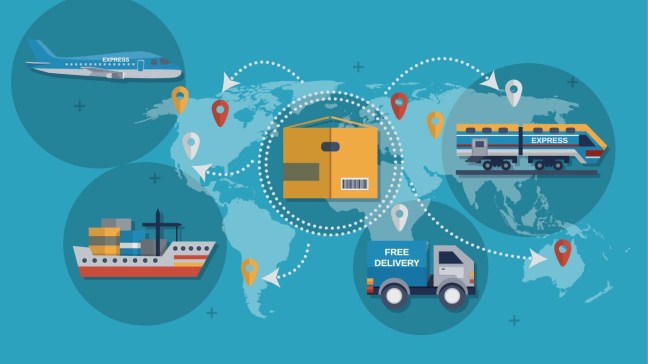
When a nation’s companies participate in GVCs as suppliers in a global chain orchestrated by a multinational firm, it is not simply a matter of exports and imports of components and finished products. As Table 1 summarizes, the far more important consideration is the interchange of ideas, methods, and technologies between the links in the chain and across borders, which upgrades jobs and living standards and accelerates economic development (Rigo, 2021; Sampson, 2022).
Table 1: Global Value Chain (GVC) Benefits, Spillovers, and Net Positive Externalities
- With GVCs, countries trade more than products; a deep exchange of management, industry, and quality standards exists between partners along the GVC.
- The orchestration of GVCs by the lead multinational firm involves sharing, distributing, and integrating the lead firm’s and suppliers’ technology.
- GVCs drive productivity growth by copying methods from multinationals, creating jobs, and upgrading living standards.
- GVCs enable countries to tap into growing funding available to Environmental, Social and Governance (ESG) coalitions and other global mandates.
- Countries that participate in GVCs grow faster and climb the skills and technology ladder, moving to higher-value-added tasks with more sophisticated technological products and accelerating their development.
Some of the ideas in the table are adapted from Global Value Chains, World Bank Group (2023).
According to Gereffi et al. (2021), in types (1) and (3) GVCs, the multinational company is acting out of self-interest in actively sharing expertise, production methods, and even some trade secrets with its suppliers. This self-interest stems from four strategic considerations:
- Sharing knowledge with the supplier increases the assurance of quality up to global market standards.
- By teaching and training the supplier, more and more value can be outsourced to the supplier, thus lowering the cost of the finished product.
- In many cases, the assembly supplier also acts as a strategic ally, selling the finished product in the host country market where the multinational wishes to promote sales.
- With upgraded skills and technology absorption, the supplier can begin to do part of the R&D for the multinational firm at lower salaries for scientists and engineers. For example, many Indian suppliers of active pharmaceutical ingredients (APIs) have progressed from being just producers of the compounds for Western companies to becoming participants in an innovation network led by the multinational firm (Socal et al., 2023; Kashani et al., 2023).
For the host nation, upgrading technology results in progressively higher-skilled, more sophisticated jobs, which pay far more than in earlier years when the tasks involved only basic “screwdriver” assembly work. This is how China, after 40 years of learning from multinational company affiliates operating there, as well as acting as a supplier to Western firms, has begun to rival or surpass the US in innovation. Using objective indicators such as the number of patent filings or citations in scientific and engineering journals, the Information Technology and Innovation Foundation indicates that China has already progressed from imitator to innovator and from apprentice to master (Clay & Atkinson, 2023; Cuervo-Cazurra & Pananond, 2023).
See BREAKOUT BOX 2 at End of Article: “Case Study: Galanz – How Apprentices Can Become Masters”
India also has examples. In the early days, the diamond-cutting cluster of companies in Surat handled only small, low-value diamonds. But over the years, higher-level skills and value-added features have helped Surat to progress to handling larger diamonds and finished jewelry. The IT sector and Indian pharmaceutical companies also provide examples of upgrading by becoming clients and partners with firms in advanced economies.
The general upgrading of the host nation’s workforce is also seen in productivity indicators (e.g., Output/Employee ratio). Pahl et al. (2022) found statistically higher productivity in GVC-linked jobs than in non-GVC jobs across many nations, as well as over time within GVCs. That is to say, as the supply chain partner’s employees upgrade their skills, they can be entrusted with more sophisticated automation equipment, which has higher productivity in output per employee. But proficiency with the more sophisticated equipment, requiring higher skills and knowledge, also leads to higher wages, which in turn increases disposable income and spending, with a multiplier effect in the country’s domestic market and economy.
In a world transitioning to renewable energy and nations collectively exhibiting increasing concerns for ESG issues and sustainability, multinationals are coming under greater pressure to comply with such transnational mandates (Das, 2023). At the same time, at the national level in North America and in the EU, as well as from multilateral country alliances, hundreds of billions in funding is available to effect the desired transitions. Suppliers who are functional specialists as part of a GVC not only can receive part of the funding, but more importantly can position themselves to play a role in the emerging technologies vital to future economic progress (Jangam & Rath, 2021; Dollar et al., 2017).
The beneficial impact of participation in GVCs is observed, and not just anecdotally for the “Asian tiger” economies such as Korea or Taiwan that began in the 1970s as poor, low-wage-nation producers or assemblers of simple, cheap items for Western markets. Their firms learned methods and technologies from their multinational company buyers so that in two generations they became technology leaders and propelled their home countries from poor to affluent. But even in a much larger sample of 58 nations between 2005 and 2015, Jangam & Rath (2021) found a clear statistical link between economic growth and GVC participation.
Conclusions for India
Today, India is on the threshold of a unique (some would say golden) opportunity to accelerate its economic growth rate further, increase its currently low manufacturing base, and provide employment to the hundreds of millions who are un-/underemployed by opening up further to incoming FDI and at least partially substituting for China as the supplier of products to the world.
The moment is also ripe because of the geopolitical tensions between the West and China that are spurring multinationals to seek new sources of supply because (1) the Indian consumer market is growing at double-digit annual rates; (2) Indian companies as partners now exhibit the capabilities adequate to being GVC partners; and (3) India is (potentially) cost competitive in manufacturing (Boston Consulting Group, 2020). At the same time, personnel in the Indian government at top levels are sufficiently enlightened to understand global business (e.g., union ministers and secretaries have master’s and doctoral degrees, some from top foreign schools such as Harvard, the University of Pennsylvania, and the US Army War College) and sufficiently self-confident to craft policies that can harness multinational companies to India’s net advantage.
But despite its potential, India has thus far remained a below-global-average participant in international business in terms of FDI/GDP or trade/GDP ratio. The bureaucratic baggage of the past (some stemming from as far back as “red tape” document bundles in the East India Company[15]), the fractious political diversity of the country, the strength of labor unions, lingering corruption, and weak judicial processes inhibit incoming FDI.
By (1) investing massively in infrastructure development and electricity generation, (2) creating special economic zones for investors, (3) passing bankruptcy laws that ease and speed bankruptcies, and (4) making FDI entry applications easier and faster (and many automatic, requiring no formal approval process), Indian governments have done much to improve India’s standing as an investment destination. It is the issues of morality, discipline, and inclusiveness that remain and are harder to tackle. But, as this article has enumerated, there are considerable reasons for optimism for multinational companies to participate in India’s emergence.
BREAKOUT BOX 1
What Is the Difference Between Global Value Chains (GVCs) and International Supply Chains?
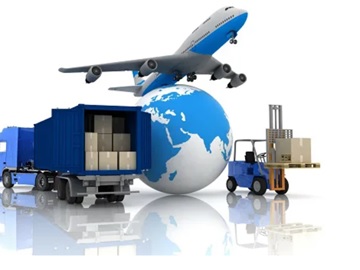
The concept of “Global Value Chains (GVCs)” is wider and more top-level than “International Supply Chains,” whose management is mainly concerned with operations, logistics, and optimization. GVC strategy is two-tiered: multinational firms have to first decide how finely to slice their operations and what value is to be added in-house versus outsourced or offshored and then design the geographical configuration of their supply chains. The two-tiered steps are as follows.
GVC STRATEGY FORMULATION
Step 1: The multinational company begins by examining each bit of its entire chain of operations – from fundamental research to production, to marketing, to after-sales services – examining each activity or function, item by item.
Step 2: For each activity or function, the company then analyzes how finely that function may be disaggregated or “sliced apart.” For instance, a firm could ask how its production can be separated into discrete steps or functions and whether it can separate the making of each component, subassembly, and final assembly into separate slices. The marketing portion could be split up into surveys, digital data capture, separate advertising for each medium (e.g., print, social media, television) and the allocation of marketing budgets across each “slice.” Even R&D can have portions done in separate steps. Of course, not all activities or functions can be easily split apart. Hence, several activities in the “value chain” will need to be combined under one roof or one organization.
Step 3: The next question is which of the slices, activities, or functions have to be done in-house or by the company itself versus which portions of the value chain may safely be outsourced. Many considerations enter into this decision, such as the need to protect proprietary designs by keeping several sensitive activities closely guarded within the company. There are four strategic choices for such activities:
-
- Done entirely within the company itself and in the home country of the multinational firm.
-
- Outsourced to independent vendors in the home country.
-
- Done within subsidiaries and affiliates in foreign countries (and in which countries).
-
- Outsourced to independent vendors in foreign countries (and in which countries).
The above strategic choices are calculated based on data obtained from global operations and collected in coordination with the Supply Chain Department.
SUPPLY CHAIN DEPARTMENT IMPLEMENTATION AND MANAGEMENT
Step 4: The Supply Chain Department of the multinational company next designs and orchestrates the details of its International Supply Chain – the organizational and spatial distribution of activities or functions. It compares the cost of adding value in different geographical locations, incorporating into the calculations transportation costs, tariffs, taxes, and geopolitical and other risks such as “spillovers” or unintended technology leakage (Tan et al., 2016). In this step, the company also includes factors such as demand management, brand equity, ethical sourcing, and corporate social responsibility.
Step 5: Daily management of the International Supply Chain, in terms of vendor or partner relations, sea and air transport, warehousing, and management and optimization of inventories.
BREAKOUT BOX 2

Case Study: Galanz – How Apprentices Can Become Masters
Galanz is still a relatively unknown brand outside China, but it is one of the largest producers of microwave ovens in the world. In 1978, Galanz was only a dealer trading duck feathers. In 1995, it became a contract supplier of microwave ovens for Japanese and European brands with technology and designs licensed from Toshiba (then the world leader). By 1998, with growing demand in China and Western nations, Galanz became the world’s largest microwave oven manufacturer, with a 40 percent global market share. Since 2007, Galanz and Midea (two Guangdong-based firms) have dominated the world market for microwaves and appliances, both under their own brands and by producing models for many other global brands.[16] Having absorbed the best-available technology, in 2008, Galanz started its own $100 million plus R&D annual budget so that by 2020 it owned 1,600 patents (in computer controls, AI, and automation).
The imitator had become the innovator.

Today, Galanz has the best features built into its ovens, such as computer-controlled sensors that monitor the food’s weight, vapor, and temperature; electric inverters that use less electricity; and built-in “air frying,” convection cooking, baking, and roasting. In 2021, Galanz became a controlling shareholder of Whirlpool (China).
The apprentice had become the master.
[1] Foreign Direct Investment, percent of GDP – Country rankings | TheGlobalEconomy.com, accessed August 23, 2023.
[2] About Indian Economy Growth Rate & Statistics, | IBEF.org, December 2022.
[3] PM Modi promotes India as semiconductor hub, talks of supply chain resilience | MillenniumPost, September 11, 2024.
[4] Atmanirbhar Bharat is neither ‘isolationism’ nor ‘protectionism’: Nirmala Sitharaman , | The Times of India, October 12, 2022.
[5] Nayak, G. India to emerge as third largest consumer market by 2026: Report. | The Economic Times, December 18, 2024.
[6] Susin, M. Unilever to Double Down on India Under New Strategic Shift. Wall Street Journal, November 22, 2024.
[7] Contractor, F. J. (2022). The world economy will need even more globalization in the post-pandemic 2021 decade. Journal of International Business Studies 53, 156–171. Also see the GlobalBusiness.blog post.
[8] Even after accounting for internal migrants who returned to their villages in central China, or retired, or died, 171.9 million in 2022 are still said to be working at a far distance from their homes, mainly in manufacturing jobs. See Number of migrant workers in China 2012-2022 | Statista.com, April 28, 2023.
[9] International Labor Organization (ILO; 2022). World Social Protection Report 2020–22.
[10] Following questions about their methodology, data manipulation in some countries, and the incidence of the pandemic, the World Bank paused the survey in 2020 and proposed replacing it in 2023 with a new survey methodology called B-Ready.
[11] Cited in Sanjeev Nayyar, We blame the Centre for low GDP, but India is run by states. Financial Express, February 16, 2022.
[12] India’s oldest pending case, originally filed in 1952, was settled after 72 years on January 16, 2023, in the Calcutta High Court. Some may take solace in the fact that in Victorian times, even in England, a few cases took decades to complete. While Charles Dickens’ novel Bleak House relates the fictional case of Jarndyce v Jarndyce, which was pending for 36 years, the story reflected the reality of backlogs in English chancery courts at that time (Dickens, 1853). More than a few traces of the colonial mindset still remain.
[13] Or arbitration in international venues such as Singapore or Switzerland, although that concept, at present, seems politically and financially infeasible.
[14] To be candid, experience around the world has shown that not all industrial policies implemented by governments work out or produce benefits that exceed their cost to taxpayers. India, however, seems to be well positioned to take advantage of the decoupling from China, and given its employment needs the benefits will likely exceed the costs.
[15] Charles Dickens, in his novel David Copperfield, wrote sadly about Victorian England, saying “Britannia…is…like a trussed fowl: skewered through and through with office-pens, and bound hand and foot with red tape” (Dickens, 1850). Also see For a Twist, Dickens’ Tales Today by Jonathan Yardley, Washington Post, December 16, 1985.
[16] A Wikipedia entry indicates that, in 2019, Galanz produced half of the world’s production of microwave ovens but cautions that the entry needs “editing” (Galanz – Wikipedia).
REFERENCES
Bhardwaj, S. & Chakraborty, N. (2019). Foreign Direct Investment and Its impact on Indian Economy – A Critical Analysis. Indian Economic Review, 6(1).
Boston Consulting Group (2020). A Manufacturing Strategy Built for Trade Instability.
Business Standard (2021). Atmanirbhar Bharat to make India global supply chain hub: Shringla. November 26.
Caballero & Fengler (2023). China and India: The future of the global consumer market. Brookings Institution, April 14, 2023.
Chiang, S. (2023). Vietnamese EV maker VinFast is now worth more than Ford and GM after Nasdaq debut. CNBC.com. August 16.
Clay, I. & Atkinson, R. (2023) Wake Up, America: China Is Overtaking the United States in Innovation Capacity. Information Technology and Innovation Foundation – Hamilton Center on Industrial Strategy. January 23.
Contractor, F.J. (2018). Thousands of Hindu Gods – Made in China: Seven Reasons Why India’s Manufacturing Competitiveness Lags China’s. Rutgers Business Review 3(1), 1-15. Also see the GlobalBusiness.blog post India Jumps 30 Places Higher in World Bank Rankings: Update on “Thousands of Hindu Gods – Made in China.”
Contractor, F.J. (2022). The world economy will need even more globalization in the post-pandemic 2021 decade. Journal of International Business Studies 53, 156–171. Also see the GlobalBusiness.blog post of the same title.
Contractor, F.J. (2023). India@2047 in the Global Economy. Speech and presentation delivered at the Indian Academy of Management annual meeting at Mumbai. January.
Contractor, F.J., Dangol, R., Nuruzzaman, N., & Raghunath, S. (2020). How do country regulations and business environment impact foreign direct investment (FDI) inflows? International Business Review, 29(2).
Cuervo-Cazurra, A., & Pananond, P. (2023). The rise of emerging market lead firms in global value chains. Journal of Business Research, 154.
Das, A. (2023). Predictive value of supply chain sustainability initiatives for ESG performance: a study of large multinationals. Multinational Business Review.
Dickens, C. (1850). David Copperfield. Wordsworth Classics, 1997.
Dickens, C. (1853). Bleak House. Wordsworth Classics, 1997.
Dollar, D.R., Inomata, S., Jetro-Ide, Degain, C., Meng, B., Wang, Z., et al. (2017). Global value chain development report 2017: measuring and analyzing the impact of GVCs on economic development. World Bank Group.
Gereffi, G., Lim, H. C., & Lee, J. (2021). Trade policies, firm strategies, and adaptive reconfigurations of global value chains. Journal of International Business Policy, 4, 506–522.
Govindarajan, V., & Ramamurti, R. (2011). Reverse innovation, emerging markets, and global strategy. Global strategy journal, 1(3‐4), 191-205.
Heritage Foundation (2023). Index of Economic Freedom.
Jangam, B.P., & Rath, B.N. (2021). Do global value chains enhance or slog economic growth? Applied Economics, 53(36), 4148-4165.
Kashani, E.S., Naeini, A.B., & Gholizadeh, H. (2023). Innovation systems and global value chains: A Co-citation analysis of established linkages and possible future trends. International Journal of Innovation Studies, 7(1), 68-86.
Lovejoy, B. (2021). Apple suppliers in India selected for incentives, likely to be used for iPad production. July 2.
Mehta, S. & O’Donnell, A. (2022). 10 Lessons to Help India’s Poorest Stand on their Own Feet: Learnings from Bangladesh, India and Africa. World Bank Blogs.
Mittal, S. (2023). Supreme Judicial Backlog: Pendency of cases in Indian courts crosses the 5 crore mark. Organizer: Voice of the Nation. July 2.
OECD (2002). Foreign Direct Investment for Development: Maximising Benefits, Minimising Costs. Organization for Economic Cooperation and Development. Paris.
Pahl, S., Timmer, M.P., Gouma, R., & Woltjer, P. J. (2022). Jobs and Productivity Growth in Global Value Chains: New Evidence for Twenty-five Low-and Middle-Income Countries. The World Bank Economic Review, 36(3), 670-686.
Park, H-O. (1996). Segyehwa: Globalization and Nationalism in Korea. University of Michigan Journal of the International Institute, 4(1).
Rigo, D. (2021). Global value chains and technology transfer: new evidence from developing countries. Review of World Economics, 157(2), 271-294.
Rodriguez, C., Ciravegna, L., & Petersen, B. (2023). Geographical reconfiguration in global value chains: Search within limited space? Global Strategy Journal, 13(2), 440-482.
Sampson, T. (2022). Technology transfer in global value chains. London School of Economics – Center for Economic Performance. Discussion Paper No. 1826. February.
Socal, M.P., Ahn, K., Greene, J.A., & Anderson, G.F. (2023). Competition and Vulnerabilities in The Global Supply Chain for US Generic Active Pharmaceutical Ingredients. Health Affairs, 42(3), 407-415.
Statistia.com (2023). Share of foreign invested enterprises in total import and export merchandise trade value in China from 1986 to 2021.
Tetakawi (2021). Average Hourly Wage in The US Vs. The Hourly Wage in Mexico. October 30, 2021.
Times of India (2022). Atmanirbhar Bharat is neither ‘isolationism’ nor ‘protectionism’: Nirmala Sitharaman. October 12, 2022.
Van Assche, A. (2018). From the editor: Steering a policy turn in international business – opportunities and challenges. Journal of International Business Policy, 1, 117-127.
Witt, M.A., Lewin, A.Y., Li, P.P., & Gaur, A. (2023). Decoupling in international business: Evidence, drivers, impact, and implications for IB research. Journal of World Business, 58(1), 101399.
World Bank (2020). Doing Business 2020: Comparing Business Regulation in 190 Economies.
World Bank Group (2023). Global Value Chains.
World Bank Data (2023). GDP per capita (current US$) – Vietnam | Data (worldbank.org)
Xing, Y. (2022). China and global value chain restructuring. China Economic Journal, 15(3), 310-329.
 GlobalBusiness . blog - Education, Commentaries, & News from Economic & Cultural Perspectives